
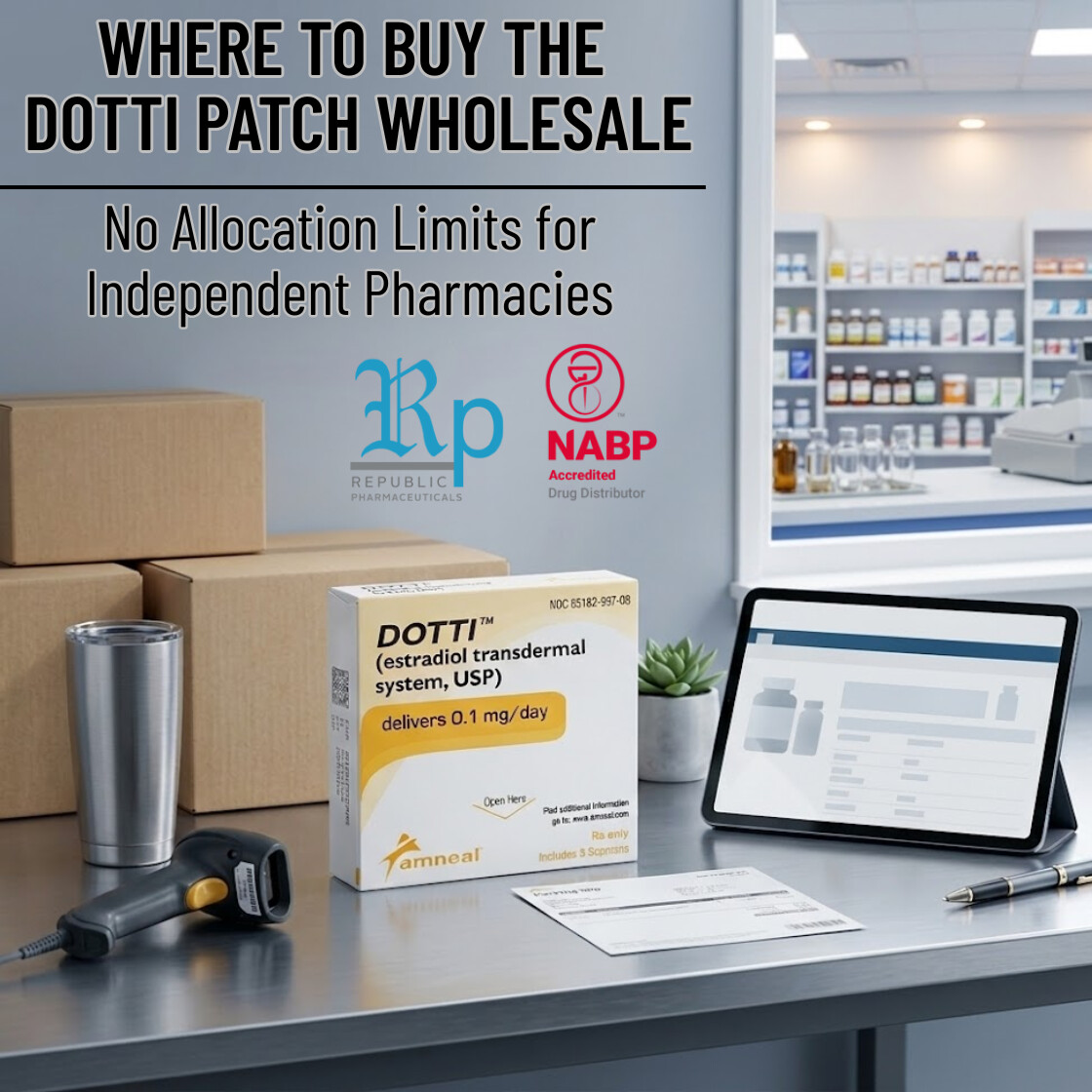
If you run an independent pharmacy, you already know the sinking feeling of logging into your primary wholesaler portal, typing in an NDC for a critical hormone replacement therapy, and seeing that dreaded red text. Allocated or Out of Stock. Right now, the surge in demand for menopausal treatments has created severe bottlenecks in the supply chain. For pharmacists trying to buy Dotti Patch wholesale, the biggest hurdle isn’t necessarily that the drug doesn’t exist. It is that your primary distributor is rationing inventory and controlling how much of it you are allowed to have.
| Sourcing Feature | Primary Wholesalers | Independent Secondary Wholesaler (Republic) |
|---|---|---|
| Inventory Allocation | Strictly capped based on your pharmacy’s historical purchasing algorithms. | Zero caps. Unrationed fulfillment based entirely on current physical warehouse stock. |
| Account Prioritization | National corporate chains receive first priority. | Equal access. Community pharmacies get the same priority as any other licensed facility. |
| Contract Requirements | Requires rigid GPO compliance and strict minimum monthly purchase volumes. | No contracts, no minimums. Buy only what you need, when you need it. |
You are on the front lines of patient care, fielding anxious phone calls from women who rely on their twice weekly estradiol transdermal systems. Yet, when you try to restock your shelves, you hit rigid supply caps. You might need twenty boxes to fill your active scripts this week, but your primary supplier only lets you buy three. To navigate this frustrating landscape, independent pharmacies need to understand exactly why they are being shortchanged and how to leverage secondary sourcing networks to bypass these limits.
The Hidden Mechanics Behind Inventory Rationing
To understand why you can’t get the inventory you need, we have to pull back the curtain on how national distributors manage drug shortages. In late 2025, the FDA lifted long standing black box warnings on hormone replacement therapy products. This triggered a massive surge in prescriptions nationwide. When a high demand product like the Dotti Patch experiences a manufacturing slowdown, primary distributors don’t divide their remaining inventory equally. Instead, they rely on automated allocation algorithms.
These systems evaluate your pharmacy’s historical purchasing data. The algorithm asks how many boxes of Dotti Patches your specific independent pharmacy bought from them last year. If you only ordered a few boxes a month previously, your allocation cap during a shortage is set incredibly low. In some cases, if you didn’t have a high baseline volume, the system zeroes you out completely. The algorithm decides you don’t need the drug, even if you just acquired ten new patients this week who urgently require it.
This creates a massive disadvantage for community pharmacies. The primary wholesaler system inherently protects massive corporate chains that buy in bulk. The chain store down the street gets their shelves stocked because their historical volume dictates priority. This leaves independent owners scrambling to figure out where to buy Dotti Patch wholesale just to take care of their loyal neighborhood patients.
The True Cost of Turning Patients Away
As a pharmacy owner, you know that the impact of an allocation limit goes far beyond a single lost sale. Hormone replacement therapies require strict clinical adherence. A patient using an estradiol transdermal system can’t simply skip a week without experiencing a resurgence of severe symptoms.
When you have to look a patient in the eye and say your wholesaler won’t send you enough patches, she doesn’t blame the distributor. She just knows she needs her medication. Inevitably, she will transfer her prescription to the big box chain store that the primary distributors prioritized.
Losing a patient over a supply chain issue is devastating. You lose the very thing that sets independent pharmacies apart from the chains, which is reliable, personalized community care. Here is what is actually at stake when you rely solely on an allocated primary distributor:
- Loss of Patient Trust: Patients expect their local pharmacy to have their routine medications ready when they need them.
- Loss of Associated Revenue: You don’t just lose the margin on the patch, you lose the patient’s entire family prescription profile and OTC purchases.
- Operational Strain: Your pharmacy staff spends hours calling other pharmacies or tracking down doctors to find alternatives.
Breaking Free from the Quota Trap
So, what is the solution? How do you protect your patients and your bottom line when the primary supply chain chokes? The answer lies in diversifying your pharmaceutical sourcing and partnering with an independent secondary distributor that operates outside the traditional algorithm model.
When an independent pharmacy looks to buy Dotti Patch wholesale through a specialized secondary distributor like Republic Pharmaceuticals, the rules of engagement completely change. We understand your local patient needs fluctuate and that historical data from a year ago doesn’t help the patient standing at your counter today.
Secondary distributors offer an open access fulfillment model. This means we strip away the restrictive Group Purchasing Organization tiering and ignore historical purchasing baselines. Our operational philosophy is incredibly straightforward. If the product is sitting in our distribution facility, it is available for you to purchase. If we have 100 cartons of estradiol patches available, and your pharmacy needs 100 cartons to clear a backlog, we will ship you all 100 cartons. No rationing, no priority tiers, and no algorithm telling you that you haven’t earned the right to buy the medication your patients need.
Reclaiming Your Inventory Control
The pharmaceutical supply chain will always experience ebb and flow. Manufacturer shortages and unexpected surges in demand are simply realities of the healthcare industry. However, being subjected to arbitrary rationing doesn’t have to be your reality.
You built your independent pharmacy on the promise of being there for your patients when they need you most. Don’t let a primary wholesaler quota system force you to break that promise. By understanding how the allocation game is played, and by building strong relationships with secondary distributors who prioritize uncapped inventory access, you can shield your pharmacy from the worst impacts of national shortages.
The next time you face a restricted order for critical hormone replacement therapies, remember you have options. You have the power to step outside the restrictive primary network, secure your inventory on your own terms, and ensure every patient who walks through your doors leaves with the medication they came for.
About Republic Pharmaceuticals
Republic Pharmaceuticals is a VAWD-accredited licensed secondary pharmaceutical wholesaler based in Michigan, serving independent pharmacies, physicians, long-term care facilities, veterinary practices, and healthcare organizations nationwide.
Recently named one of Dispense Marketing’s Top 10 Secondary Pharmaceutical Wholesalers for 2025, Republic helps pharmacies stay stocked and profitable — without contracts or high minimums. Whether you’re managing a shortage or optimizing your purchasing strategy, Republic is committed to helping your organization thrive.
DSCSA & EPCIS Ready: Republic has implemented serialized traceability and EPCIS data exchange so your orders arrive with compliant, auditable documentation—reducing risk and smoothing inspections.